Few things make you feel as free as travelling with a camper and taking your home wherever you go. That’s why today we leave you with two routes that we love and always recommend so that you can start preparing your next holiday!
Route through the White Villages
The White Villages of Andalusia are a beautiful area to explore by camper, and doing it in spring is even better, as the weather and temperatures are much more good than in summer. You will need at least a weekend to do this route and get to know the various most beautiful white villages. The ideal would be 3 or 4 days, but the route can be adapted depending on availability and the villages you prefer to visit.
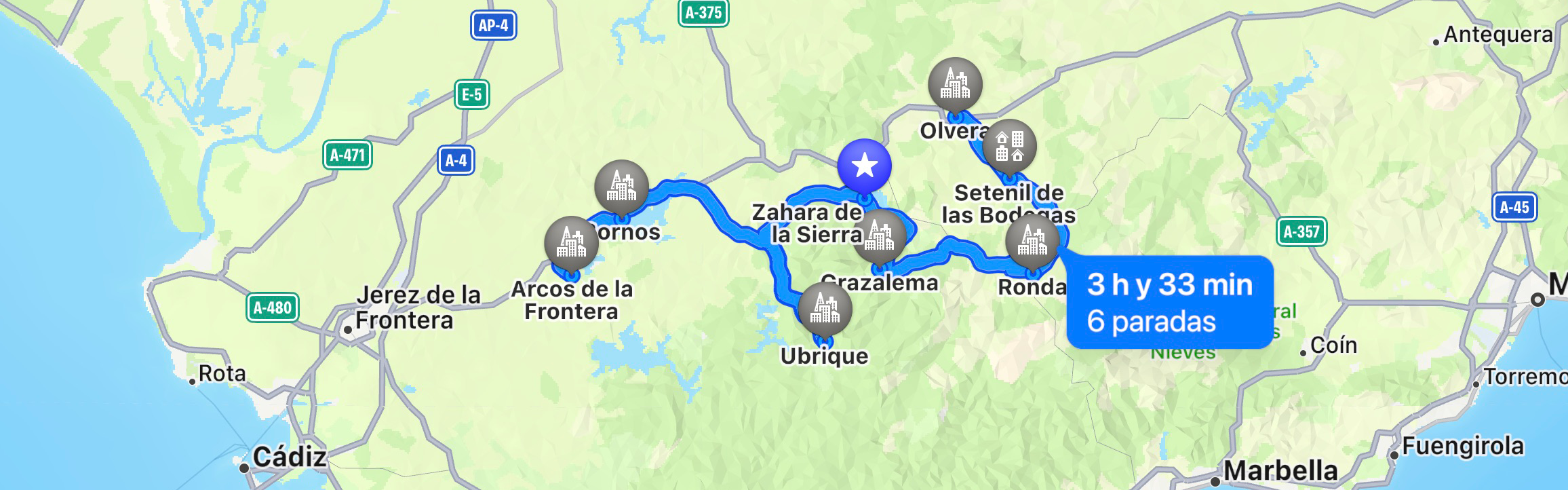
Route through the White Villages from Arcos de la Frontera to Olvera
- Arcos de la Frontera could be the entrance to the White Villages, since it is the town of reference. It is the largest in the region and is located on a cliff, above the Guadalete River. Its cultural heritage, which stands out among its white houses, is of considerable importance; among it is the church of Santa María de la Asunción, from the fourteenth-fifteenth century. You can’t miss its viewpoints, the panoramic views are incredible from the Plaza del Cabildo, the alley of the Nuns, and to the north, looking at the reservoir.
- Next, we will head to Bornos which, despite being a small town, is surprising. It is located between the mountains and the Bornos reservoir, a few kilometres from Arcos de la Frontera. The village is developed around the Fontanar Tower, from which you can get an incredible view of the patron saint’s church. Not far away we find the beautiful Palacio de los Rivera and its elegant gardens. Do not miss the Convent of Corpus Christi, which is now an institute.
- Further on, you will find Ubrique, which is located between the National Parks of Grazalema and Suredes. A very beautiful white village, known for the manufacture of leather. The treatment of leather has been a part closely linked to its culture for generations. The handmade items are of inimitable quality, and even the big fashion firms have set their sights on their confections.

Arcos de la Frontera, Cádiz
- To get to El Bosque you will have to return along the same road as you will get to Ubrique. The order of stopping in these two villages is easily interchangeable. Like all the White Villages in the province of Cadiz, El Bosque has a long history behind it. The resistance of the local population together with the bandits against the French, in 1815, to defend the Kingdom of Ferdinand VI was what granted it independence as a “town”. So this moment is remembered every year in November with a historical reenactment.
- Zahara de la Sierra will be the next town to visit. Located in the heart of the Sierra de Grazalema Natural Park, this town falls in love at first sight with its mosaic of white houses perched on the Sierra del Jaral and the Zahara-El Gastor reservoir, as well as having beautiful cobbled streets.
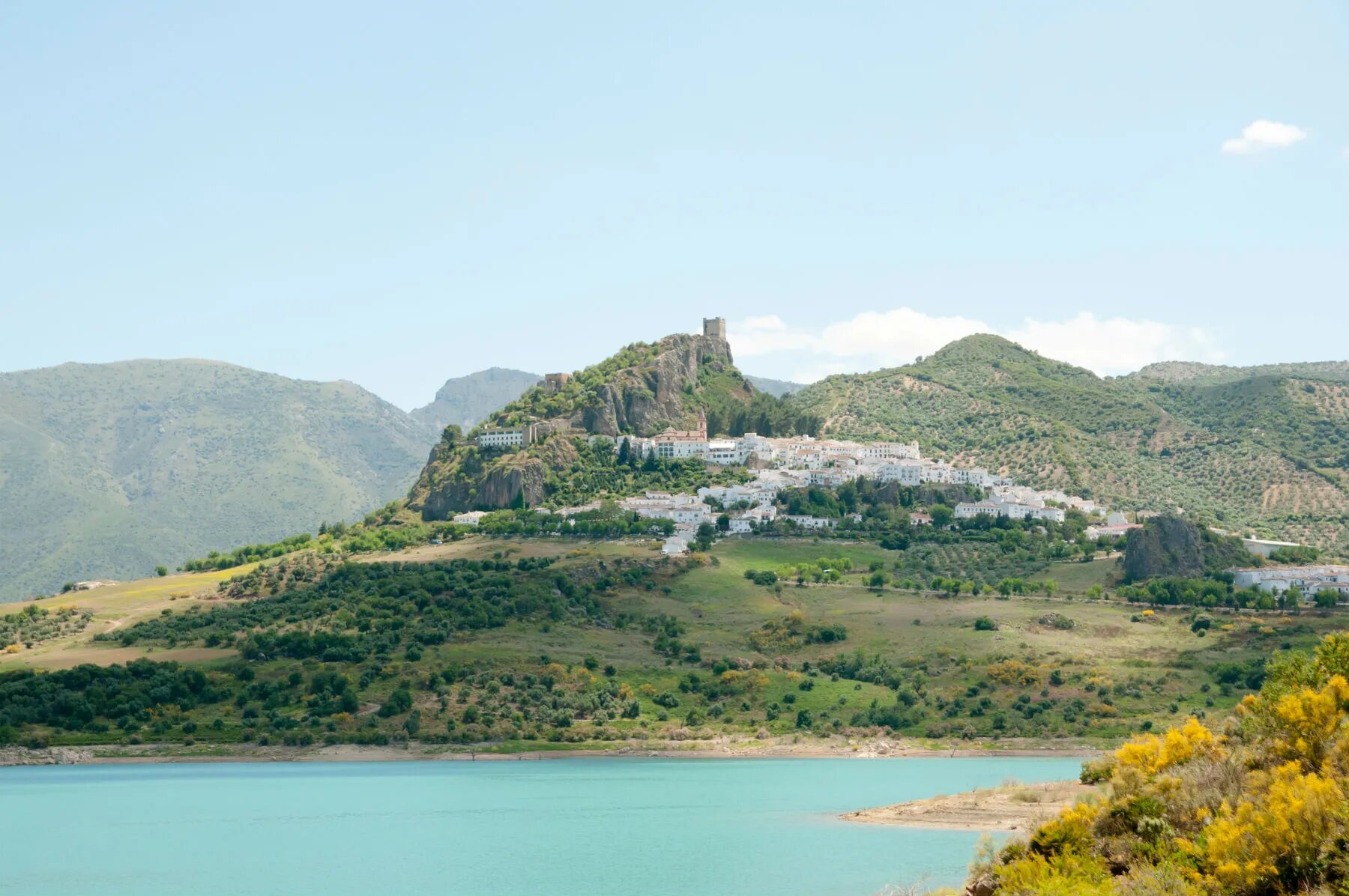
Zahara de la Sierra, Cádiz
- The next stop on the route will be Grazalema, a tiny white village. Few people still live in that municipality. It is a very beautiful town, especially in terms of landscape, and surely, the tranquility that is breathed is priceless. Despite its few residents, there is no shortage of local products of excellent quality, such as Payoya goat cheese and fabrics made from wool. The handmade blankets are very much appreciated. It is also an ideal starting point for hiking routes to the Natural Park, for example, going up to the Calvario hermitage or doing the Pinsapar route.
- Ronda is one of the oldest cities in Spain. Located on a deep gorge, the origins of this city date back to the Paleolithic period. Here you will find palaces, churches, squares, Arab baths and charming corners, and you can go for tapas along Bola Street. In addition, you will find the New Bridge, which connects the old neighborhoods with the newer ones of the city. The best views to observe this bridge are at the end of a small path that leaves from the Plaza de María Auxiliadora.
- To finish the route, we will go to Setenil de las Bodegas, the white village that presents the most curiosities of all. This village has literally developed among the rocks. Its houses are complemented by the mountains, creating a unique white nucleus in the world. Instead of being built on top of the mountain, like most of its neighbouring villages, Setenil has been covered by it. This creates a play of light and shadow, of stones and white facades that will not leave you indifferent.
- Finally, we will visit Olvera where we will be able to see Calle Calzada, one of the most famous in the town. You will also find other emblematic monuments such as the seventeenth-century Sanctuary of Nuestra Señora de los Remedios, the Castle of Olvera, the Church of Nuestra Señora de la Encarnación and the Building of La Cilla.
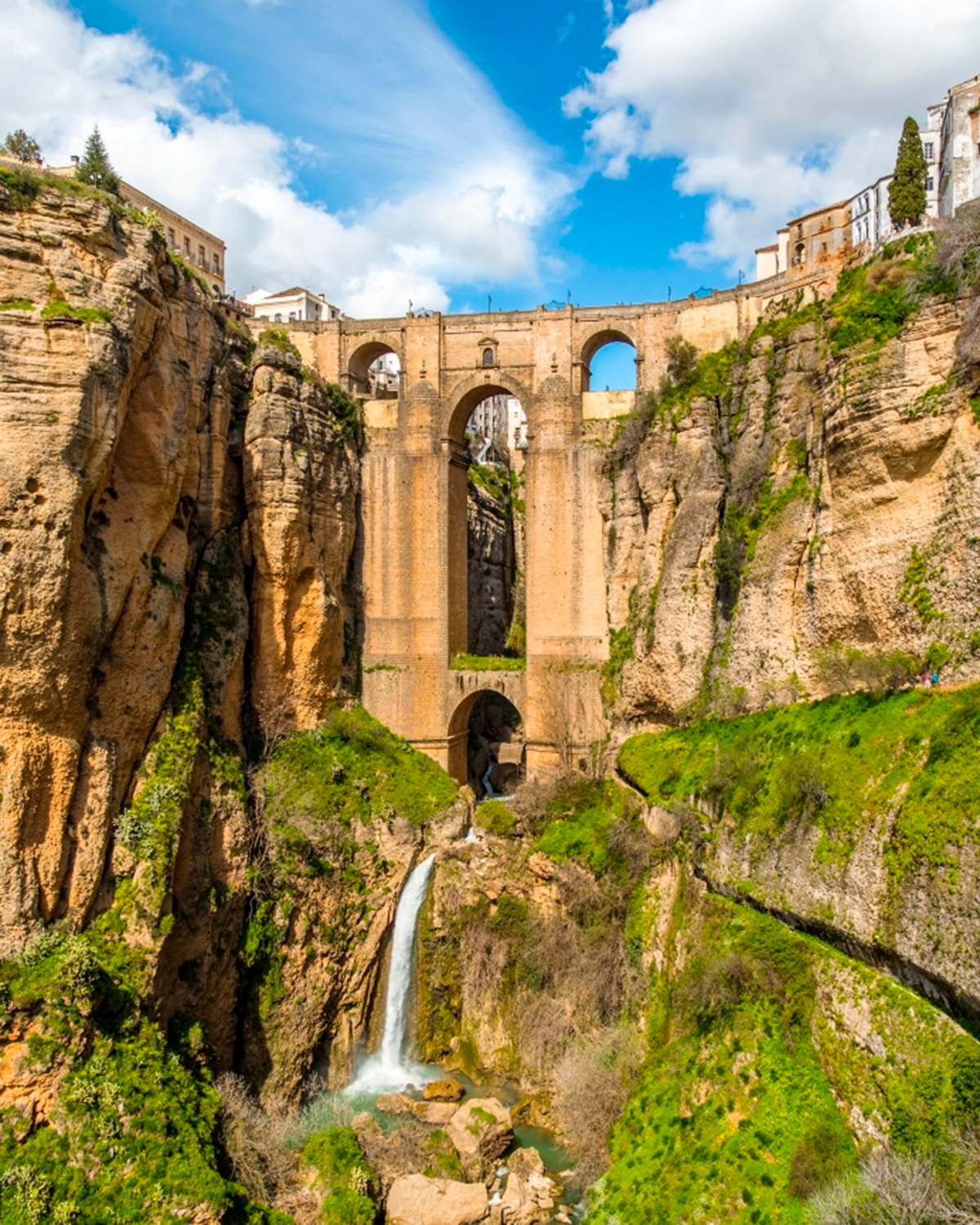
New Bridge in Ronda, Malaga

Olvera, Malaga
Route through the Basque Country
Something we love about the Basque Country is the great variety of landscapes, the contrast of the sea and the mountains and the number of activities that can be done: surfing, cultural tourism, gastronomy, hiking or a mixture of all of them. So, if you would like to visit the towns on the Cantabrian coast, this route is for you!
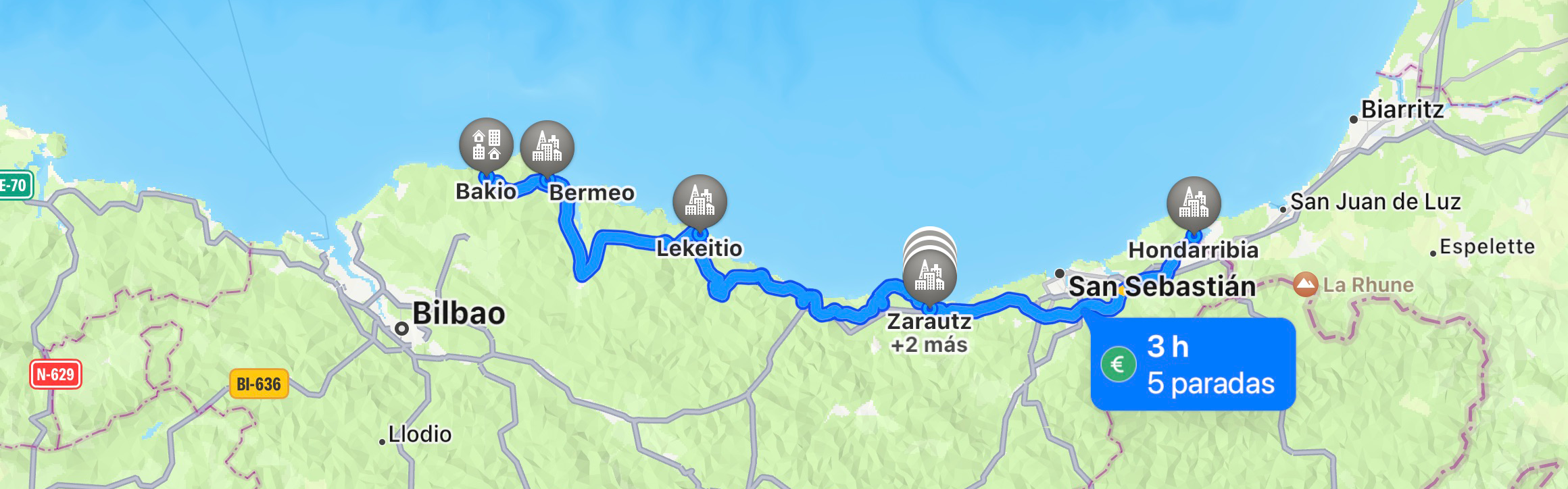
Route through the Basque Country from Hondarribia to Bakio
- We will start our route in Hondarribia, where we will find one of the best preserved old neighborhoods in the Basque Country. It has two main gates that cross its wall. We recommend you get lost in the old town, visit the Plaza de Gipuzkoa, stroll along Calle Mayor and see the Plaza de Armas, where the old castle of Charles V is also located.
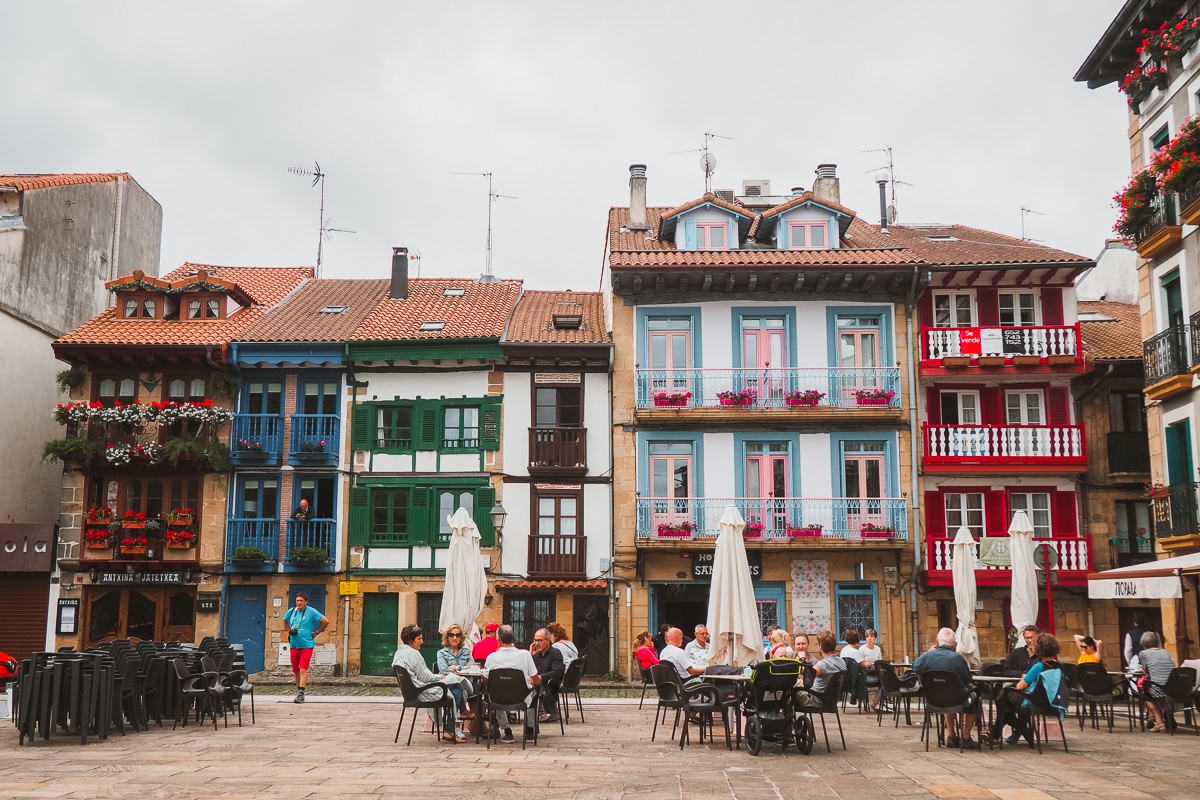
Hondarribia, Gipuzkoa
- Afterwards, we will head to Zarautz, where we will arrive in about an hour. Zarautz has a spectacular beach, one of the best in Gipuzkoa, it is very wide and one of the favorite destinations for surfers. It is the best place to spend a quiet day at the beach, take a walk along the promenade and eat at Carlos Arguiñano’s restaurant.
- Shortly after we will find Guetaria, a small fishing village. Here you can take a walk through its steep streets, from the mountain of San Antón to the port and then take the opportunity to eat grilled fish and some pinchos accompanied by the typical Txakoli wine.
- The next stop on the route is Zumaia. A city surrounded by green mountains that end in spectacular cliffs. This is a beautiful part of the Cantabrian coast and one of our favourites to get to know the Basque Country by camper. We highly recommend taking the Flysch route, which consists of a boat trip of one to three hours to get to know the Geopark of the Basque coast. It is one of the ideal places to visit the Basque Country with children!
- Later, we will stop in Lekeitio. This will be the first stop we will make within the province of Vizcaya. It is a beautiful fishing village, famous in times past for its brave whale fishermen. In the old town, passing through the main street Arranegi Kalea, we see the contrast of stately homes emblazoned with humble fishermen’s houses.
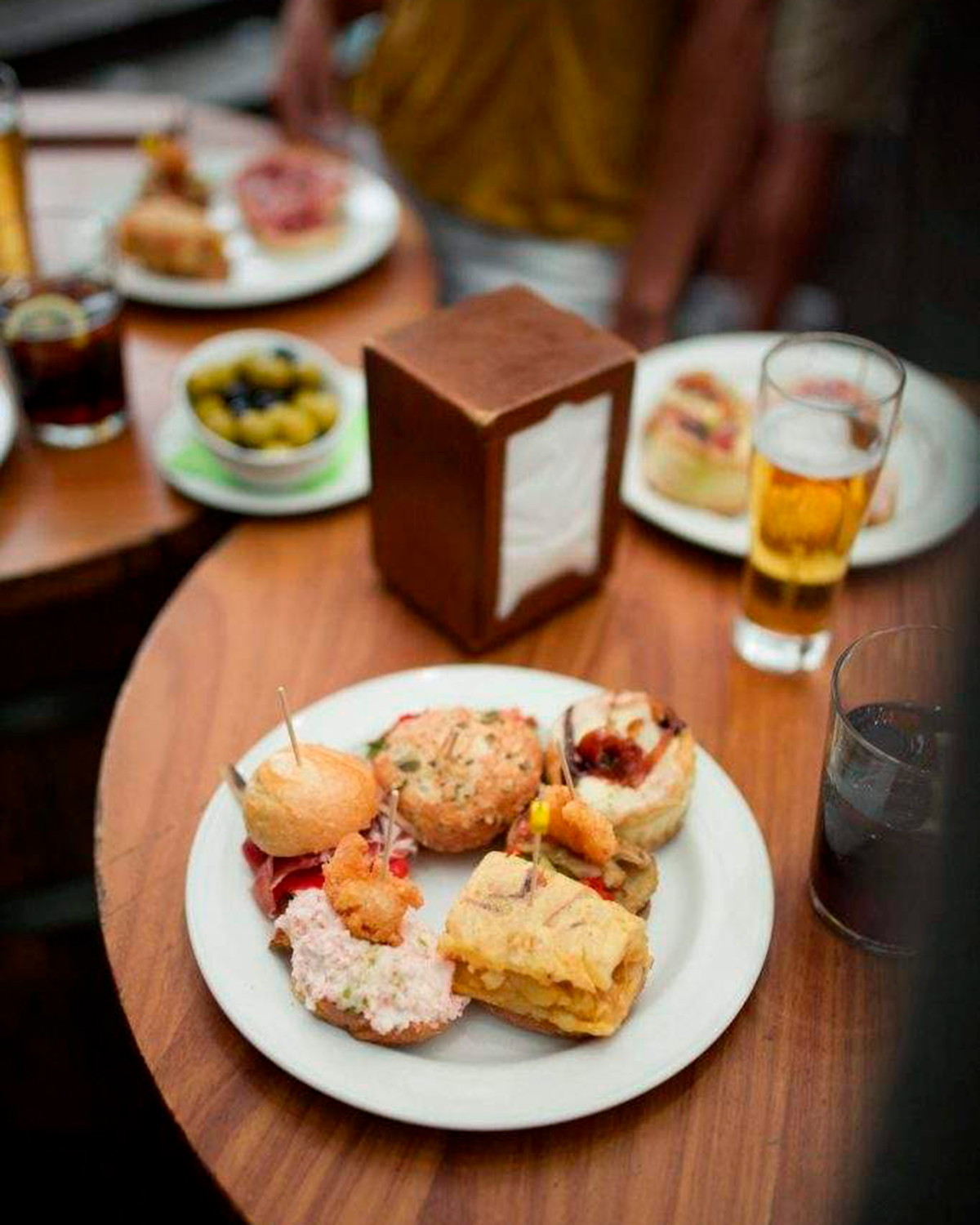
Pintxos in Guetaria, Gipuzkoa
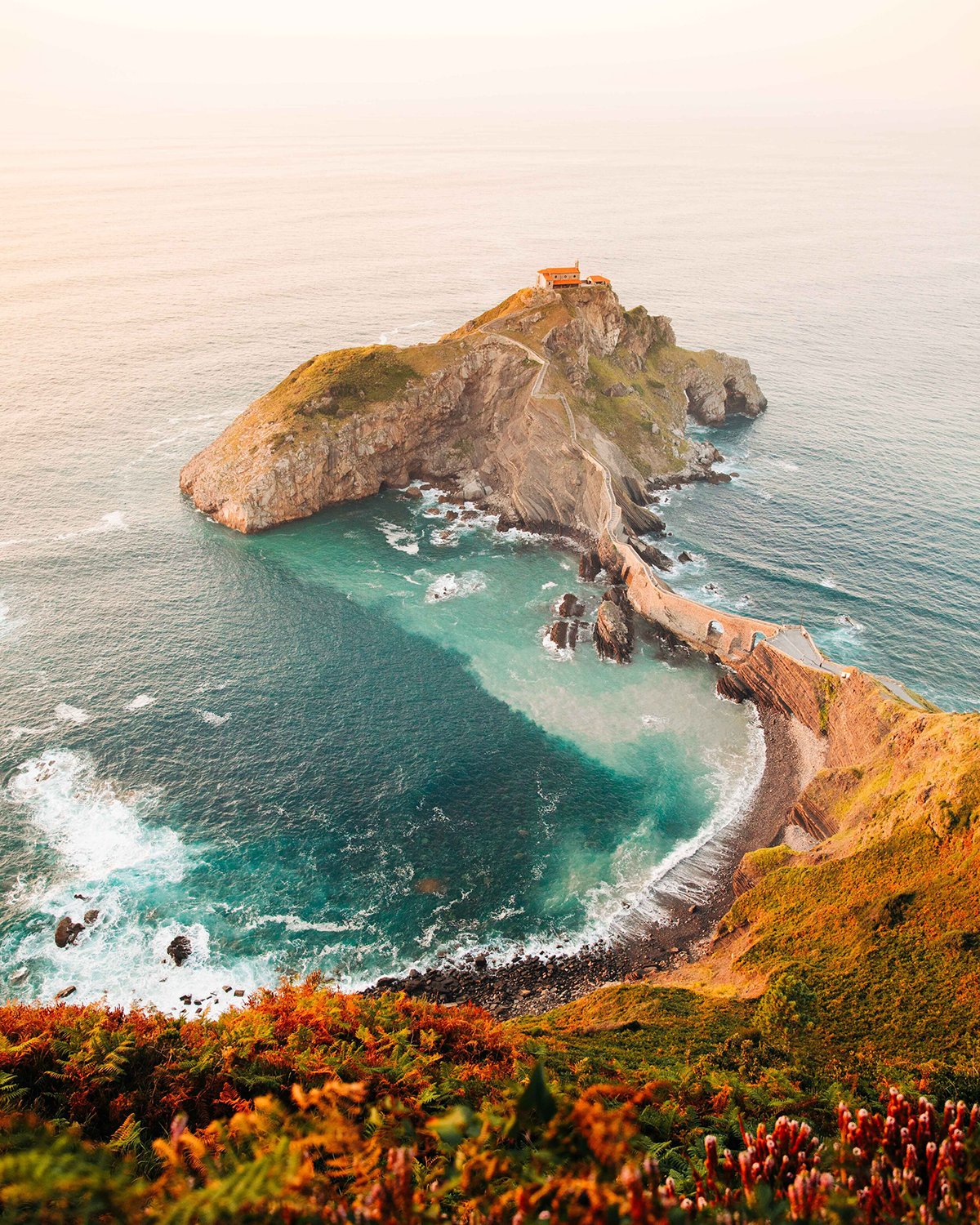
- To finish the route, we will visit Bermeo, a fishing village located 36 kilometers from Bilbao. It has a beautiful old port, fishermen’s houses surrounded by narrow and cobbled streets. In addition to the port, you can visit San Juan de Gaztelugatxe, a small islet that is connected to the ground by a bridge built on rocks. In addition, the strong waves have been forming tunnels and caves over the years. Reaching the highest part of San Juan de Gaztelugatxe means climbing 241 steps, but the effort is well worth it for the beautiful views you will find!
- Finally, we will make the last stop in Bakio. This is a Biscayan municipality that offers us great possibilities such as seeing spectacular cliffs, 4×4 routes, surf lessons or hiking excursions.
You see, camper routes in the north allow us to combine the trip with culture, gastronomy, sport and, why not, days of rest.